


Leafly: Find Cannabis and CBD
4.717.23K Reviews
App Specs
- Version
- 9.1.0
- Updated On
- License
- Free
- Downloads
- 5,000,000+
- Developer
- Leafly Holdings, Inc
- Categories
- Medical
- Platform
- Android, iOS
Screenshots
 Analysis by AppCompare
Leafly is the kind of medical app that feels immediately useful if you are trying to understand cannabis rather than simply browse a product catalog. I found its strongest appeal in the way it brings dispensary discovery, strain research, and practical education into one place. The first session is easy to justify: you can look for nearby cannabis retailers, compare strain information, and get a clearer vocabulary for choices that otherwise feel confusing.
After that initial curiosity, the more important question is whether it deserves a regular place on your phone. In my experience, the answer depends on how often cannabis is part of your routine and how much you value researching before buying. Leafly does not replace a pharmacist, doctor, or local legal guidance, and I would not treat its strain descriptions as medical instructions. Still, it can become a useful reference when used carefully, especially for adults who want to make more informed decisions.
What makes the first week so appealing
The app is developed by Leafly Holdings, Inc and is listed as a free medical app for mature users. Its focus is broad enough to help several kinds of people: someone visiting a dispensary for the first time, an experienced consumer comparing unfamiliar strains, or a patient trying to organize questions before speaking with a healthcare professional. I liked that the experience begins with practical discovery instead of forcing me through a long setup process.
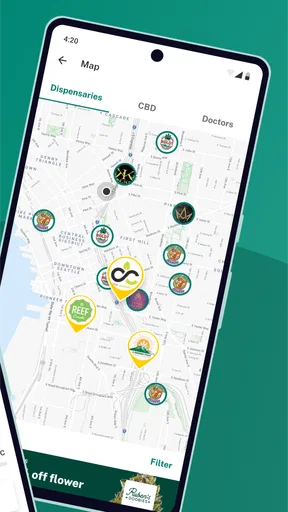
The dispensary-finding side is probably the quickest source of value. Rather than searching the web, opening separate retailer pages, and trying to work out which information is current, I could use one cannabis-focused destination to start the process. That does not mean every displayed detail should be accepted without checking. Store hours, inventory, delivery areas, and local rules can change, so I see Leafly as a research starting point rather than a final guarantee.
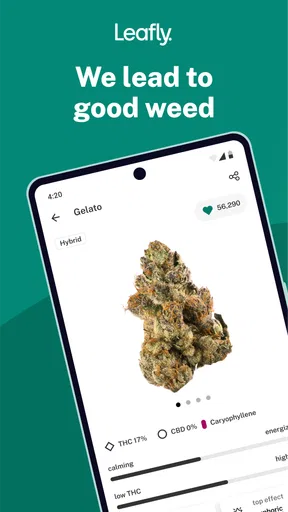
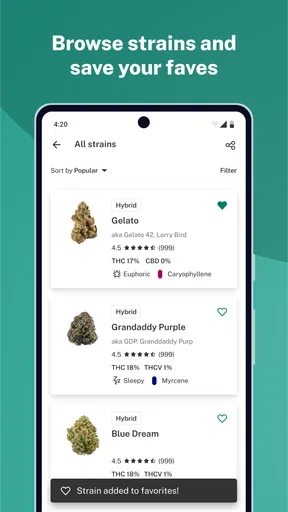
Strain browsing is where the app becomes more interesting than a simple map. The descriptions give me a way to compare names and reported characteristics before I arrive at a dispensary. This is especially helpful when a menu contains dozens of unfamiliar options. Instead of asking a sales associate to explain every item from scratch, I can arrive with a short list and more precise questions.
A useful first-week habit is to separate what the app reports from what I personally experience. Cannabis effects vary with tolerance, dosage, timing, product format, and individual health factors. Leafly can help me notice patterns in product descriptions and user-oriented terminology, but it cannot predict my response with certainty. That distinction prevents the common mistake of treating a strain label as a promise.
The education angle also gives the app a longer runway than a standard store locator. New users may need basic explanations of strains, cannabinoids, and product language, while experienced users may want a refresher when a product category changes. I found this most valuable before shopping, when a few minutes of reading helped me avoid making a rushed decision based only on packaging or a familiar-sounding name.
Worth Reading Before You Choose

Baby Panda World Brings Quick Play to Modern Phones, but Its Game Library Feels Busy

ESPN’s Live Game View Makes Following Close Games Easier

QuizzLand Review: A Good Fit for Short Trivia Breaks, Not Every Player

Basketball Stars: Multiplayer Is Fast, but Can It Recover When Matches Go Wrong?

WEBTOON Turns Phone Updates Into a Better Reading Routine

Link to Windows Runs on Shared Habits, Not Social Feeds
There is also a quiet social benefit to having a shared reference point. If two adults are discussing what to try, they can begin with the same strain page or product terminology instead of relying on vague descriptions such as “strong” or “mellow.” That makes conversations more specific, although I would still confirm details directly with the retailer and follow local regulations.
The first-week appeal is reinforced by the app’s established presence. It has an average rating of 4.7 from around 95 thousand ratings, and it has passed 5 million installs. Those figures do not prove that every user will enjoy it, but they do suggest that Leafly has become a familiar tool for a substantial audience rather than a short-lived novelty.
How I would use it before a dispensary visit
My preferred workflow is to begin with location, then narrow the search by the type of product or strain information I actually need. I would read several entries instead of choosing the first attractive name, write down questions about potency and intended use, and only then check the retailer’s own menu or contact the store. This order matters because it keeps discovery separate from purchasing pressure.
For a first-time visitor, I would also avoid arriving with the expectation that the app can choose a perfect product. A better goal is to use it to learn the vocabulary needed for a productive conversation. Ask about dosage, onset, duration, interactions, and whether a product is appropriate for your circumstances. Leafly helps prepare that conversation; it should not be used to skip it.
Why it can remain useful month after month
Leafly’s recurring value comes from changing needs rather than constant entertainment. If I shop regularly, the ability to investigate a new strain or locate a different dispensary can save time repeatedly. The app is more likely to become a habit for someone who compares products, travels between legal markets, or wants to keep learning than for someone who buys the same item from the same retailer every time.
One non-obvious strength is that it can function as a decision filter. Instead of browsing every menu item, I can use the information in the app to eliminate options that do not match my preferences or questions. That reduces the mental load of a large dispensary menu. The trade-off is that filtering by strain identity alone can be misleading, because products with the same name may differ considerably by producer, cultivation, formulation, and batch.
I also see value in using the app as a preparation tool for recurring conversations with healthcare professionals. If I am considering cannabis alongside prescription medication or managing a health condition, I can use Leafly to identify terms and product categories worth discussing. The important boundary is that an app page is not a clinical review. A doctor or pharmacist is better placed to evaluate interactions, contraindications, and personal risk.
Another practical use is comparison over time. I can note which descriptions sounded appealing, which products were easy to find, and which questions remained unanswered. Leafly itself should not be treated as a personal medical diary, but using a separate private note alongside it can make future shopping more deliberate. This is a better long-term strategy than repeatedly choosing based on a colorful label or a familiar strain name.
The app also has value for people who want to understand CBD alongside cannabis. That makes it more flexible than a tool devoted only to locating recreational products. Even here, I would keep expectations realistic. “CBD” does not automatically mean risk-free, non-intoxicating in every context, or suitable for everyone. The useful role of Leafly is helping me investigate terminology and options, not turning a complicated health decision into a simple recommendation.
Its broad reach is reflected in the fact that Leafly has around 17 thousand written reviews in addition to its larger rating total. I read that kind of popularity as evidence of continued interest, but not as a substitute for evaluating whether the app fits my own routine. A high rating can coexist with occasional outdated listings, uneven descriptions, or a browsing experience that feels excessive for a simple purchase.
The maintenance burden is modest, but real
The main maintenance task is verification. Before relying on a dispensary listing, I would check the retailer’s current menu, opening hours, purchase requirements, and local rules. This is not a flaw unique to Leafly; local cannabis information changes quickly. Still, the app can create a false sense of certainty if I assume that a listing is identical to live inventory.
Product research also requires maintenance because names and menus evolve. A strain page may remain useful as background information while the specific product available nearby has a different formulation or strength. I would compare the app’s general description with the label in front of me, especially when the purpose is medical rather than casual.
There is a second kind of maintenance: keeping my own expectations grounded. If I use Leafly often, I need to remember that reported effects are personal and that more browsing does not necessarily produce a better outcome. The app can encourage endless comparison, but the most responsible choice may be the one supported by clear labeling, professional advice, and a cautious approach.
Privacy and maturity also deserve attention in everyday use. Leafly is rated Mature 17+, which fits the subject matter and the need for adult judgment. I would avoid treating it as a casual app for younger users, and I would be mindful when browsing in shared spaces. The mature rating is not merely a label to ignore; it signals that the content and decisions involved require a responsible context.
On the technical side, the current version is 9.1.0 and the app supports an operating-system requirement of 7.1 or later. That broad compatibility is helpful for people using older devices, although compatibility alone does not guarantee that every phone will feel equally fast or that every location will have equally useful listings. I would keep the app updated when possible, particularly for location-based information and general stability.
Where long-term fatigue can appear
The biggest source of fatigue is repetition. If I already know my preferred retailer and product, opening Leafly for every purchase may add an unnecessary step. The app earns its space when I am exploring, comparing, or learning; it is less compelling when my shopping routine has become completely predictable.
Another fatigue point is information overload. Strain names, reported effects, product types, and dispensary options can make the app feel like a research project. That is useful during a thoughtful first purchase, but tiring when I only need a quick answer. I found it better to set a narrow purpose before opening the app, such as finding nearby retailers or understanding one unfamiliar term.
There is also a risk of overconfidence created by precise-sounding categories. Cannabis effects cannot be reduced to a universal checklist, and strain labels are not a guarantee of the experience I will have. If a user treats the app’s descriptions as definitive medical advice, Leafly becomes the wrong tool for the job. A licensed healthcare professional, pharmacist, or regulated retailer is a better choice for individualized guidance.
People who live where dispensary information is limited may also get less recurring value. The educational material can still be relevant, but the discovery function matters less if nearby legal access is unavailable or if local rules make the listings impractical. In that situation, an official government resource or a direct conversation with a healthcare professional may be more useful than a broad cannabis guide.
I would also skip it if I wanted a purely clinical medication-management app. Leafly is centered on cannabis discovery and education, not on replacing a treatment plan, monitoring symptoms under medical supervision, or managing prescriptions. That distinction is important for anyone approaching the subject because of a serious condition or a complex medication schedule.
Who gets the most from keeping it installed
I think Leafly is a strong fit for adults who want to research before buying, compare dispensaries, or become more comfortable with cannabis terminology. It is particularly useful for a new shopper who feels overwhelmed by menus and wants to arrive prepared. It can also serve experienced users who enjoy exploring products but want a more organized way to begin.
I would recommend a more cautious approach for anyone using cannabis for a medical concern. Use the app to prepare questions, not to self-diagnose or adjust treatment without professional input. Ask a doctor or pharmacist about interactions and personal suitability, and treat product labels and local regulations as essential parts of the decision.
For a person who never changes products, never visits different dispensaries, and already has reliable professional guidance, the app may not justify regular attention. In that case, a retailer’s own menu or an official local resource could be faster. Leafly’s advantage is breadth and discovery, so its value naturally falls when there is nothing left to discover.
Does it earn lasting space?
My long-term verdict is positive, with boundaries. Leafly earns a place on my phone when I use it as a research companion: find a dispensary, learn the language, compare possibilities, and arrive with sensible questions. Its free access lowers the barrier to trying it, while the combination of location discovery and strain education gives it more recurring value than a basic directory.
It does not earn permanent attention simply because it contains a large amount of information. The app works best when I open it with a specific purpose and then verify important details elsewhere. If I let browsing replace judgment, professional advice, or label checking, its convenience becomes a weakness.
Leafly was released on January 24, 2012, and its continued presence is understandable: it addresses a recurring problem for cannabis consumers who need to make sense of unfamiliar choices. I would keep it installed during periods of exploration, travel, or changing needs. If my routine became completely fixed, I might use it less often rather than delete it immediately, because its reference value could still be useful when a new question comes up.
My recommendation is to treat Leafly as a well-organized starting point, not an authority. For adults who want practical discovery and better preparation, it can become a genuinely useful monthly habit after the novelty fades. For anyone seeking personalized medical direction or a simple one-tap purchase experience, a healthcare professional, official local information, or a trusted dispensary may be the better companion.
That balance is what makes the app worthwhile. It helps turn a confusing search into a more informed process, but the final decision still belongs with the user, the product label, local law, and qualified advice. Used that way, Leafly: Find Cannabis and CBD offers lasting value without asking me to mistake convenience for certainty.
Pros
- Detailed strain profiles include effects
- flavors
- and user-reported experiences.
- Nearby dispensary listings make it easier to compare local cannabis options.
- Cannabis news and educational content support more informed decisions.
- Product reviews and ratings provide useful insight before visiting a dispensary.
- CBD and cannabis information is organized for both beginners and experienced users.
Cons
- Availability and listing accuracy can vary significantly by location.
- Some features depend on local dispensary participation and updated menus.
- The amount of content may feel overwhelming for first-time users.
- User reviews can be subjective and may not reflect consistent results.
- Certain products and services are limited by regional cannabis regulations.
FAQs for Leafly: Find Cannabis and CBD
What is Leafly: Find Cannabis and CBD used for?
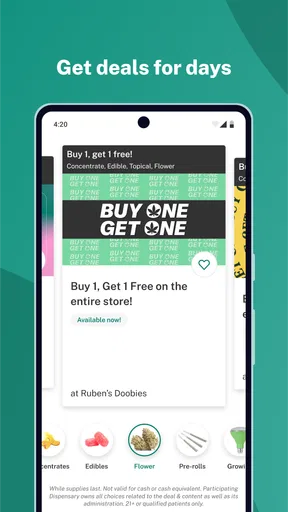
Leafly is an informational and discovery app for cannabis and CBD products. It helps users explore strains, read descriptions and effects, compare products, find nearby dispensaries, view menus where available, and learn from educational content and user reviews. The app is most useful for researching options before visiting a retailer, although product availability and features depend on your location.
Can I buy cannabis or CBD directly through Leafly?
Leafly may let you browse dispensary menus, place an order for pickup, or request delivery in supported areas, but it is not a universal marketplace. Ordering options depend on local laws, participating retailers, and whether cannabis sales are permitted where you live. You will generally need to complete the purchase through an authorized dispensary and meet applicable age and identification requirements.
Is Leafly available everywhere, and does it show local dispensaries?
Leafly can be used in many locations for general cannabis education, but local listings, menus, ordering, and delivery coverage vary considerably. After entering a location, the app displays participating dispensaries and available products when data is provided. Listings may change quickly, so it is wise to confirm opening hours, inventory, pricing, and legal requirements directly with the retailer before traveling.
Does Leafly provide reliable information about cannabis strains and effects?
Leafly offers detailed strain profiles, cannabinoid information, terpene descriptions, reported effects, medical-use discussions, and community reviews. This content is helpful for comparison and general education, but individual reactions can differ substantially. Product names, potency, and effects are not guaranteed to be identical across growers or retailers. Treat the information as guidance rather than medical advice or a promise of specific results.
What should I know about privacy, age restrictions, and responsible use?
Leafly is intended for adults who are legally permitted to access cannabis-related information in their jurisdiction. Some features may require an account, location access, or age verification, and the app may use personal data to provide nearby listings and personalized content. Cannabis can impair coordination and judgment, so users should follow local laws, avoid driving after use, and consult a qualified professional about health-related questions.


